
The Art of Digital Storytelling: Choosing the Right Gear to Capture the Moment
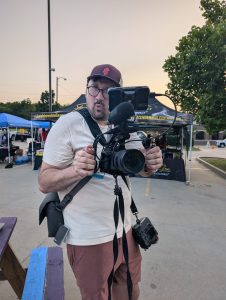
From smartphones and 360-degree cameras to professional photography and drones, here's how Social Media Tulsa puts technology to work capturing the moments that make an event memorable.
Behind the Lens: How Social Media Tulsa Uses Cameras to Tell the Story of an Event
From professional photography and drones to 360-degree cameras and smartphones, here's how we choose the right equipment for live event coverage.
There's no shortage of cameras on the market. Some fit in your pocket, some capture everything around you, and others require a photographer who knows exactly what they're doing.
At Social Media Tulsa, we use a little bit of everything.
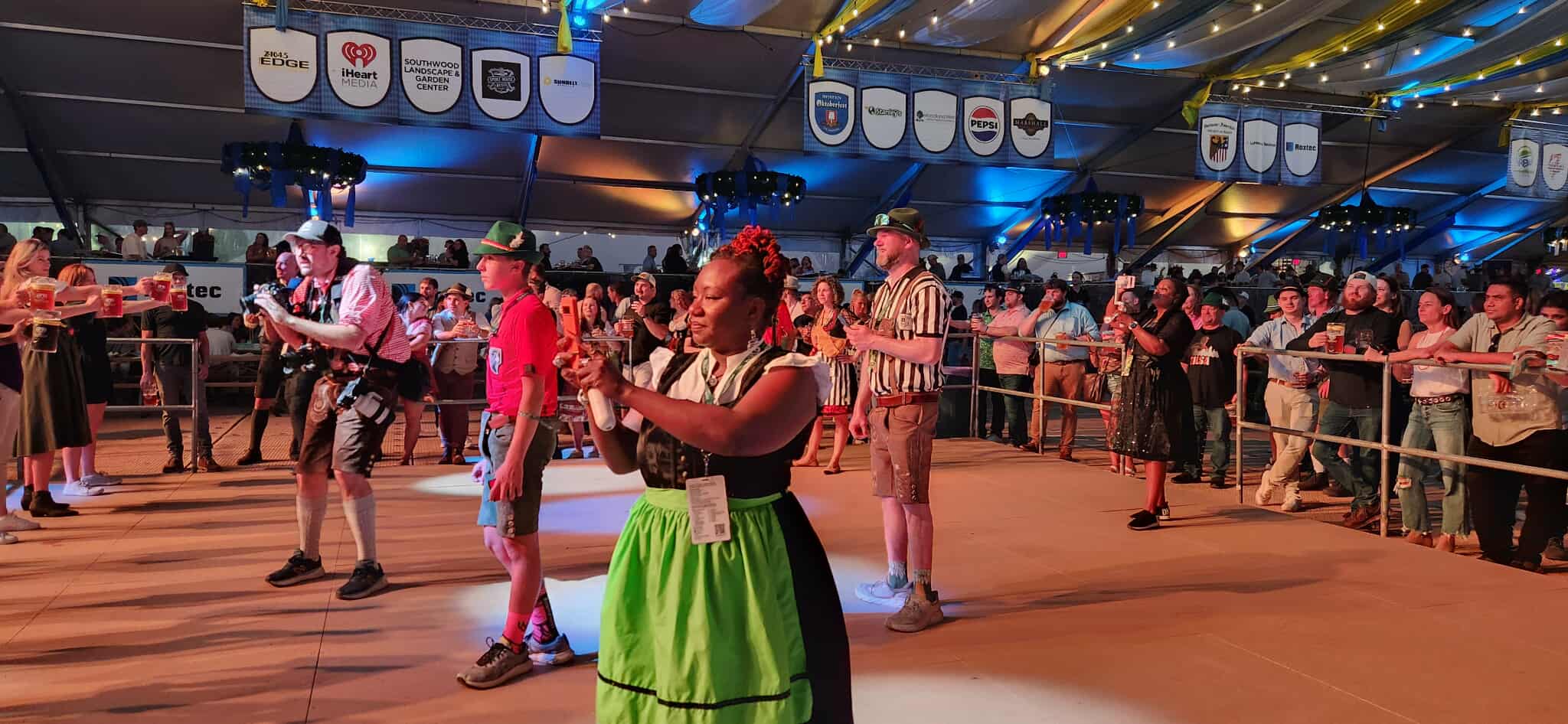
We've spent years covering events including Zeeco Oktoberfest Tulsa, Folds of Honor FreedomFest, SCOTFEST, and the Route 66 Marathon. Along the way, we've learned that no single camera can capture everything happening at a live event.
And honestly, we wouldn't want it to.
Our job isn't simply to document that an event happened. We're there to help organizers promote the experience, connect with their audiences, recognize their sponsors, and create content that keeps working long after the event is over.
And, of course, create a little FOMO.
We want to capture the moments that make someone stop scrolling and say, "I wish I was there."
Live Event Coverage Is a Different Kind of Content Creation
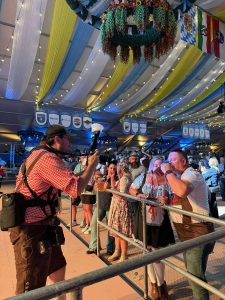
Imagine covering a festival with thousands of attendees, multiple entertainment stages, food vendors, activities, and sponsors spread across an entire park.
While one team member is capturing a live performance, another is photographing festivalgoers. Someone else is gathering footage for a recap reel, and another person is publishing updates to Facebook and Instagram.
Meanwhile, something unexpected happens on the other side of the festival grounds.
That's live event coverage.
Unlike a traditional photo or video shoot, we can't always control the lighting, move people into position, or ask performers to do something again.
We also have different deadlines.
Some content needs to be published within minutes. Other footage will be edited into a highlight reel the next morning. Professional photographs may be used in advertising, media coverage, sponsor reports, or promotional campaigns for years to come.
That's why our equipment isn't interchangeable. Different cameras serve different purposes, and the people using them have different responsibilities.
Professional Photography: Capturing Assets That Last
Our photographer and videographer, Patrick, handles much of the professional photography, video production, and drone coverage for our larger events.
His work serves a different purpose than the quick videos I'm capturing for Instagram Stories.
Organizers need high-quality images of entertainment, festivalgoers, volunteers, vendors, sponsors, and the overall event experience. Those photographs become valuable marketing assets.
We also need to think about composition and usage.
A great social media photo isn't necessarily the same as a photograph that works for a billboard, website banner, or media release.
We frequently need both horizontal and vertical images, room for promotional text, and photographs that capture recognizable elements of an event.
For sponsor recognition, we want more than a photograph of a sign. We want to show sponsors as part of the experience, whether that's a family enjoying an activity, guests gathered in a sponsored tent, or an interaction happening with sponsor branding visible.
Professional photography remains one of the most important investments an event organizer can make.
But even the best photographer can't be everywhere.
DJI Drones: Showing the Scale of an Event
Some events simply can't be appreciated from ground level.
Folds of Honor FreedomFest is a great example.
Our team captures the fireworks, but we're also documenting the experience of thousands of people gathering along the Arkansas River to celebrate Independence Day.
Drone photography and video allow us to show the scale of those crowds, the downtown Tulsa skyline, the river, and the fireworks display in ways that ground-level cameras cannot.
At Zeeco Oktoberfest Tulsa, aerial footage helps us show the layout of the festival grounds, the entertainment tents, and the energy of the event from above.
Those wide establishing shots are especially useful for promotional videos, event recaps, and future marketing campaigns.
Of course, drone coverage requires advance planning, appropriate permissions, and an understanding of flight restrictions. It's not simply a matter of launching a drone whenever we see something interesting.
For our team, drone footage is one piece of a much larger visual story.
Insta360 X4: Sometimes the Best Shot Is Behind You
One of the more interesting additions to our equipment lineup has been the Insta360 X4.
Unlike a traditional camera, which captures whatever you're pointing it toward, the X4 records a full 360-degree view of its surroundings.
That changes how we approach certain shots.
At a festival, there's activity happening in every direction. We might be walking through a crowd, following a parade, or standing in the middle of a celebration.
With 360-degree footage, we can decide afterward which part of the scene to feature.
We can also create different perspectives from the same recording, which is especially useful for vertical video.
For a social media team producing content across several platforms, that flexibility matters.
It doesn't replace traditional video production. It gives us another creative option, especially when we want audiences to feel like they're right in the middle of the action.
Insta360 GO: A Tiny Camera With a Different Point of View
We still have our first-generation Insta360 GO, and it's a reminder that bigger isn't always better.
Wearable cameras are useful when we want to experiment with point-of-view content.
For example, what does an event look like from the perspective of someone working behind the scenes? What does a festival activity look like from the participant's perspective?
A small camera can capture those moments without requiring someone to hold a phone or manage a larger camera setup.
Not every experiment becomes a published post, but that's part of content creation.
Sometimes we test an angle or format simply to see whether it gives us something new.
DJI Osmo Pocket: Smooth Video Without a Large Setup
Patrick also uses a DJI Osmo Pocket camera as part of his video equipment.
Compact gimbal cameras are particularly useful when moving through crowds, following performers, or capturing footage where smooth camera movement makes a difference.
During a multi-day festival, we may need short video clips for social media alongside more polished footage for daily recaps.
Having a stabilized camera that doesn't require a large rig makes it easier to capture those moments while moving between locations.
And that's important because our team doesn't spend the entire event in one place.
We're constantly moving.
Smartphones: Still Our Most Important Real-Time Tools
Here's something people might find surprising.
With all the equipment we use, smartphones are still among the most important cameras on our team.
My current phone is a Google Pixel 10, and I also use an Insta360 Flow gimbal when I want smoother footage.
Why?
Because social media doesn't wait.
When we're covering a live event, we might need to photograph an activity, record a quick interview, publish a Story, respond to a question, or share an important update within minutes.
I don't always have time to transfer footage to a computer, organize files, edit a video, and upload it.
Sometimes I need to capture it, edit it, and publish it right there.
And that's exactly what smartphones allow us to do.
There's also a strategic difference between real-time content and polished post-event production.
A beautifully edited recap video published after the event helps preserve the experience and promote future attendance.
A 15-second video of people having an incredible time, published while the gates are still open, might convince someone to come out that evening.
Both have value. They're just accomplishing different things.
The Newest Addition: Insta360 Luna Ultra
I finally broke down and ordered another camera.
This time, it's the Insta360 Luna Ultra.
I've been watching the development of compact gimbal cameras because I'm interested in equipment that offers better image quality without adding a complicated production process.
Here's the thing about me.
I'm a marketing professional, not a professional photographer.
I understand composition, storytelling, audience behavior, and what makes a photograph or video effective. I know the content I want to create and how I plan to use it.
But I don't necessarily want to spend my time adjusting aperture settings or changing lenses when something interesting is happening right in front of me.
I want to see the moment, capture it, and keep moving.
That's what interests me about the Luna Ultra.
The camera combines a Leica-engineered imaging system, stabilized video, telephoto capabilities, and features designed for mobile content creators.
I'm particularly interested in testing its still photography, low-light performance, zoom capabilities, and how easily we can move between capturing photographs and video.
Low-light performance is especially important for our work. At Oktoberfest, some of our best content opportunities happen inside entertainment tents or during nighttime performances.
And I want to see whether a compact camera can give me better photographs without sacrificing the convenience I get from my smartphone.
I've ordered the camera, but I haven't put it through an event yet. So I'm not going to pretend to know how it will perform in our workflow.
That's what we'll be testing.
Does it make capturing content easier? Is the image quality worth carrying another device? Can we move footage into our editing and publishing workflow efficiently?
Those questions matter more to me than a long list of technical specifications.
We'll share what we learn once we've had a chance to use it in the field.
The Real Challenge: Getting Content From the Camera to the Audience
One thing that doesn't get enough attention in conversations about camera equipment is what happens after you capture the footage.
For our team, that process is just as important as the camera itself.
During Zeeco Oktoberfest Tulsa, we're capturing content across multiple days, often from morning activities through late-night entertainment.
Our photographers and videographers are collecting footage while social media team members are publishing in real time.
That means we need a system for getting images and videos from the person capturing them to the person editing or publishing them.
A fantastic camera doesn't help our social media workflow much if the footage sits on a memory card until the event is over.
We need to be able to transfer files, organize assets, identify the best clips, and make them available to the right team members.
Sometimes that means publishing a quick smartphone video immediately. Other times it means transferring professional footage for a next-day highlight reel.
It's one reason I'm interested in how different camera manufacturers approach connectivity, mobile editing, file transfers, and workflow integration.
Those features may not be as exciting as a new lens or higher video resolution, but for event marketing professionals, they can make a real difference.
We Don't Capture Content Just to Have Content
Another important part of our process happens before anyone picks up a camera.
We think about what the event needs.
At Zeeco Oktoberfest Tulsa, for example, our content priorities include entertainment, food, festival traditions, sponsor experiences, and the people who make the event memorable.
At Folds of Honor FreedomFest, we're capturing families, community celebrations, patriotic moments, and, of course, the fireworks.
Each event has its own personality, audiences, and marketing objectives.
That influences what we capture and how we capture it.
A vertical video of a crowd singing along with a band might be perfect for Instagram Reels or TikTok.
A photograph of a family enjoying a festival activity could become part of next year's promotional campaign.
A drone shot showing thousands of attendees might be used in a sponsorship presentation.
And a quick interview with a volunteer could help recruit more people the following year.
We're not simply collecting footage.
We're building a library of content that serves the event's marketing goals.
The People Behind the Equipment Matter
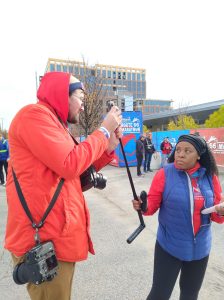
Of course, none of this works without the team.
Our event coverage brings together professional photographers, videographers, content creators, and social media managers.
We don't all use the same equipment because we're not all doing the same job.
Patrick might be capturing drone footage or professional photographs while another team member is gathering short interviews. Someone else is focused on Stories, audience questions, or content that needs to go live immediately.
And sometimes we're coordinating all of that while an event is changing in real time.
Having the right equipment matters, but knowing what to do with it matters more.
A camera doesn't know which sponsor needs recognition, which event tradition audiences look forward to, or which moments will make someone want to buy a ticket.
That's where marketing strategy and experience come in.
You Don't Need Every Camera. You Need the Right Tools.
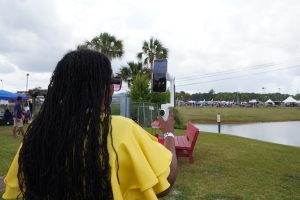
It's easy to get excited about new technology.
Clearly, I'm not immune. I just ordered another camera!
But more equipment doesn't automatically mean better content.
A small business may be able to accomplish everything it needs with a smartphone.
An event organizer might get more value from hiring a professional photographer than purchasing expensive equipment.
And a social media team covering a multi-day festival may benefit from having several different cameras, each serving a specific purpose.
The important thing is understanding what you're trying to accomplish before deciding what equipment you need.
At Social Media Tulsa, our gear has changed considerably over the years.
We've gone from early pocket video cameras and smartphones to drones, stabilized cameras, and 360-degree technology.
And we're still experimenting.
But the mission hasn't changed.
We're still focused on the moments that make someone stop scrolling and say, "I wish I was there."
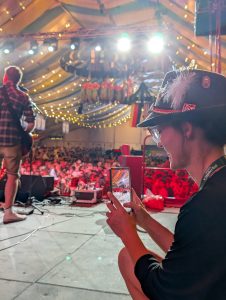
The technology helps us capture those moments.
The strategy helps us turn them into something meaningful.
And that's why we're always interested in what comes next.
Social Media Tulsa specializes in social media strategy, digital storytelling, and live event coverage.