

A Lesson in Brand Communication: What Every Marketing Team Can Learn from the PavvyTheGoalie Story
A Lesson in Brand Communication: What Every Marketing Team Can Learn from the PavvyTheGoalie Story
By Cheryl Lawson
One of the biggest misconceptions in marketing is that your brand belongs to you.
It doesn't.
Your brand lives in the minds of your customers, fans, followers, and advocates. Every interaction they have with your company shapes how they feel about you. Sometimes those interactions come from your marketing department. Sometimes they come from customer service. And sometimes they come from legal.
A recent situation involving hockey content creator PavvyTheGoalie is a perfect example of how quickly a brand interaction can go sideways.
The Situation
PavvyTheGoalie is a hockey creator on TikTok who regularly posted content featuring hockey gear and products. Like many creators, she wasn't working with a massive audience. She was simply sharing her passion for the sport and creating content that connected with fellow fans.
According to Pavvy, she received a direct message from Bauer expressing interest in a potential collaboration. Excited by the opportunity, she followed up through the proper channels.
Instead of receiving a partnership offer, she received a cease-and-desist communication regarding the use of Bauer catalog imagery.
For any creator, that kind of response would be discouraging. For a creator who was already voluntarily promoting your products, it felt personal.
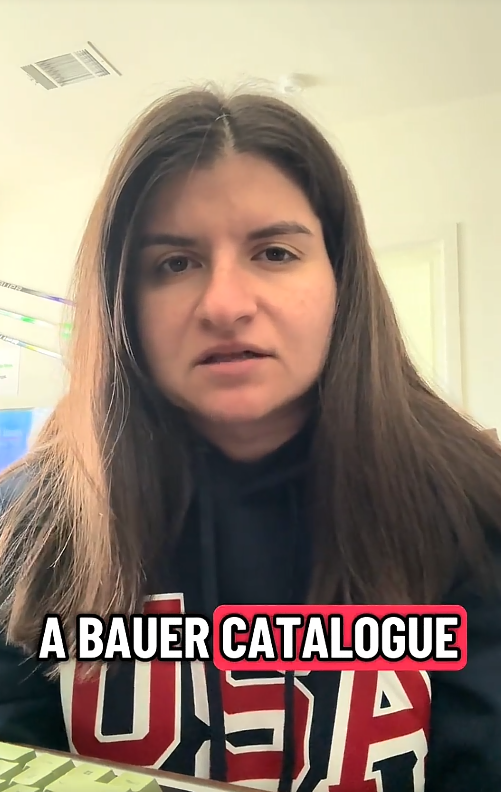
Pavvy shared her experience publicly.
@pavvythegoalie This is why the Bauer Catalogs have been removed from my a ccount. Unfortunate and not very happy with the bait and switch on Bauers end. It is what it is. #hockey #hockeyplayers #nhl #hockeygirls #hockeytiktoks ♬ Storytelling - Adriel
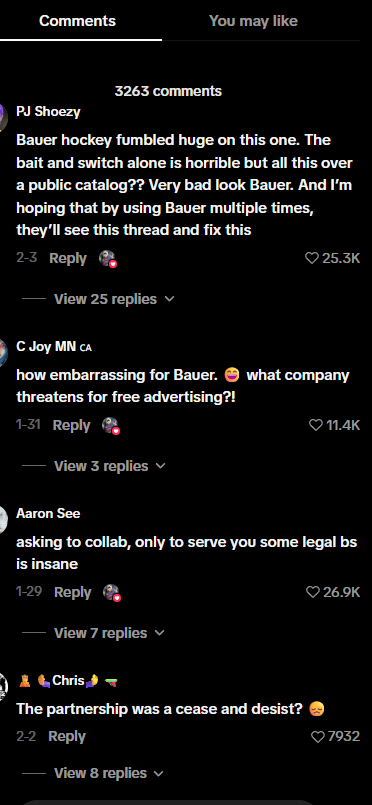
The internet responded.
The Real Problem Wasn't Legal
Let's be clear.
Companies have every right to protect their intellectual property. Legal departments exist for a reason. Copyright, trademarks, licensing, and usage rights matter.
The issue wasn't necessarily that Bauer wanted to protect its assets.
The issue was the disconnect between departments.
One part of the organization appeared interested in collaboration.
Another part of the organization delivered a message that felt punitive.
To the public, it looked like the brand didn't know what it wanted.
The Internet Loves an Underdog
One thing social media has taught us over the past decade is that audiences often rally around people more than companies.
Pavvy wasn't a celebrity.
She wasn't a major influencer.
She was a passionate fan who appeared to be treated unfairly.
That's a story people understand.
As her video gained traction, viewers began supporting her. Other hockey brands noticed the conversation and stepped in. Products were sent. Partnerships were offered. Opportunities appeared.
Her audience grew.
Ironically, the attention generated by the incident likely introduced more people to hockey than many traditional marketing campaigns.
What Other Brands Did Right
While Bauer found itself managing a crisis, competing brands saw an opportunity.
They didn't lead with contracts.
They didn't lead with legal language.
They led with relationships.
They recognized someone who genuinely loved the sport and invited her into their community.
That distinction matters.
The lesson isn't that brands should ignore intellectual property concerns.
The lesson is that people remember how you make them feel.

Why This Matters for Businesses of Every Size
You don't have to be a global sports brand to learn from this situation.
Imagine:
- A restaurant responding harshly to a customer who posted photos of their food.
- A local retailer sending legal threats instead of answering questions.
- A nonprofit shutting down an enthusiastic volunteer over a policy misunderstanding.
Every organization faces moments where policy and relationships collide.
The brands that succeed are usually the ones that find a way to protect both.
Three Lessons for Your Marketing Team
1. Make Sure Legal and Marketing Talk to Each Other
Your legal team may be right.
Your marketing team may be right.
If they aren't communicating, your customer may feel like nobody is right.
Before sending communications that affect creators, influencers, customers, or advocates, make sure everyone understands the larger relationship at stake.
2. Treat Small Creators Like Future Partners
Many brands spend thousands of dollars searching for authentic voices to represent them.
Sometimes those voices are already talking about your products for free.
Pay attention.
Today's small creator may become tomorrow's industry influencer.
3. Every Interaction Is Marketing
Customers don't separate departments the way organizations do.
They don't think:
"That was legal."
"That was customer service."
"That was marketing."
They think:
"That was the company."
Every email, message, comment, and response contributes to your brand reputation.
The Bottom Line
Bauer eventually apologized. Pavvy even spoke with company leadership and described the conversation as positive.
But by that point, the story had already become larger than the original interaction.
That's the reality of social media in 2026.
A single email can become a public case study.
A frustrated creator can become an advocate for your competitors.
And a brand interaction that takes five minutes internally can shape public perception for months.
The good news?
The opposite is also true.
A thoughtful response.
A genuine relationship.
A little empathy.
Those moments can build loyalty that no advertising budget can buy.
That's a lesson every brand can learn from.